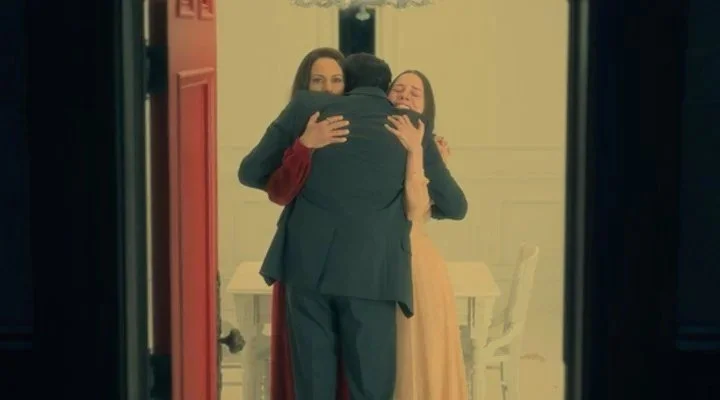
The Haunted Twins of Hill House
Content warning: Mentions of suicide and sexual assault.
Not every event that takes place in fiction is meant to be understood the same way. More fantastical elements could be literally true within the world of the story, or they could be hallucinations, drugs, lack of sleep, stylization, unreliable narrators, or any number of other mechanisms. These latter options are about putting us in line with a character’s subjective headspace, rather than giving us an objective view of their world.
Appearances of ghosts in fiction run the gamut.
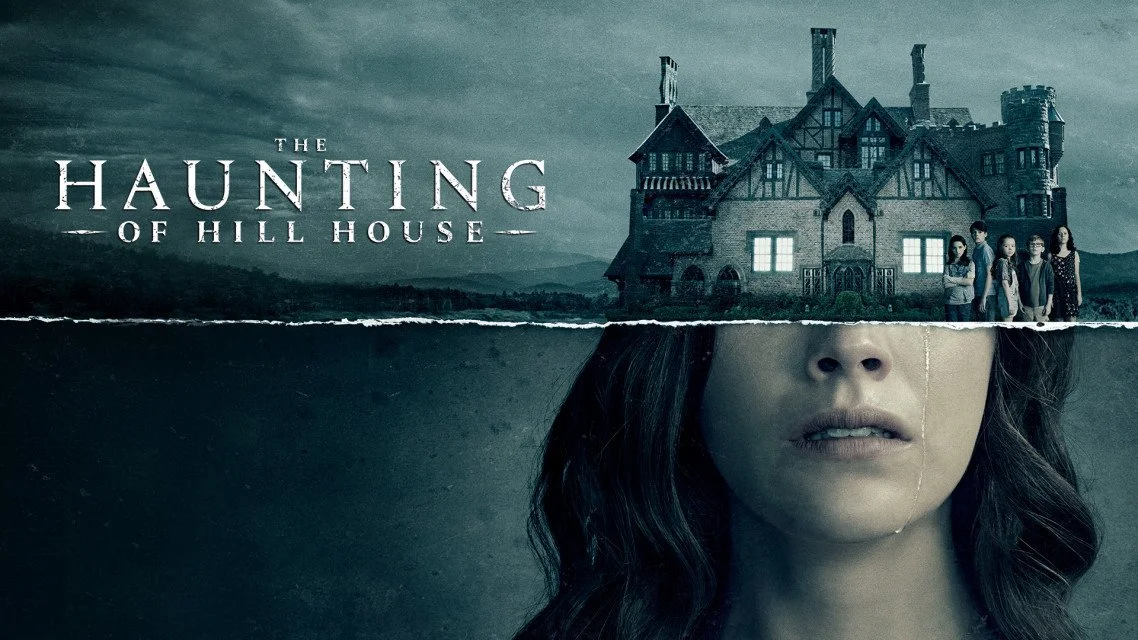
The question of the whether ghosts are meant to be understood as real becomes incredibly relevant when looking at the series The Haunting of Hill House (2018). It’s a show that practically begs the audience to question whether the ghosts in it are real or metaphors, and then simply answers:
Yes.
Haunting Trauma
The Haunting of Hill House follows the Crain family. Five siblings, Steven, Shirley, Theo, Luke, and Nell, each struggle in their own unique ways with something from their history. Throughout every episode we get flashback scenes that reveal that history: the Summer they spent in Hill House after their parents, Hugh and Olivia, bought it and moved them in with plans to flip it in just a few months.
In the present, Steven spends “Steven Sees a Ghost” (S01E01) looking into a haunting that a woman claims to be experiencing. After a night of investigation, he’s able to systematically explain everything that she’s seen. There is a rational, non-paranormal, explanation for all of it. Ultimately, he believes it to be her own desire to see her husband again that’s at the root of it. He tells her:
“A ghost can be a lot of things. A memory, a daydream, a secret. Grief, anger, guilt. But in my experience… most times, they’re just what we want to see.”
Each episode of the first half of the series primarily follows a different sibling, going from oldest to youngest. In every one of these episodes, we see this same situation play out. Someone has seen a ghost, but it’s not supernatural.
“Open Casket” (S01E02) has Shirley help a young boy who’s been seeing his dead Grandmother sitting in his bed every night. Shirley believes that what the boy is seeing is his worst nightmare of what death has caused his grandmother could look like.
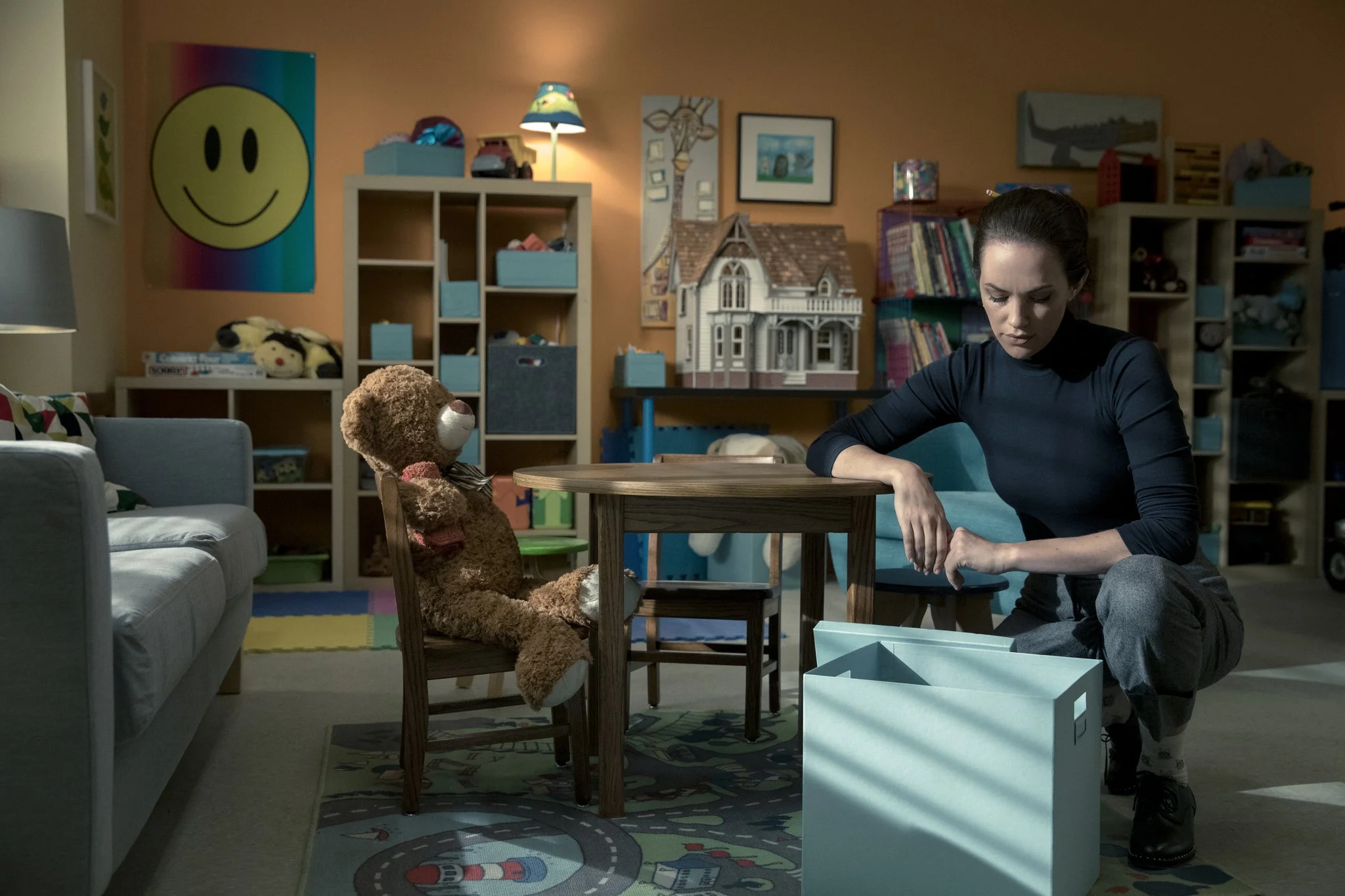
In “Touch” (S01E03), it’s Theo’s turn to speak to a haunted child. This girl has become terrified of a creature that she calls Mr. Smiley. Theo investigates and comes to find that this girl has been molested by her foster father.
“The Twin Thing” (S01E04) shows us Luke’s time in rehab. An army vet talks about seeing the corpse of a young girl while he was in Iraq. In something like PTSD, the image stayed with this man; he’d see her everywhere. He turned to drugs and alcohol, addictions he had worked passed long ago, to try to stop seeing the girl. One night, on some acid, he sees her again. The sight is so terrible, he gouges out his own eyes with a knitting needle. He’s blind, and now all he can see is her.
When it comes to Nell’s episode, “The Bent-Neck Lady” (S01E05), there is a bit of a shift in the formula: It’s Nell’s own haunted life that is given explanation. She’s talks about the woman she sees when she sleeps, a woman she’s been haunted by since she was a child. She’s told that she is suffering from sleep paralysis. In this state, things she was dreaming can appear real, and her body is still too asleep to move.
If we only look at these stories, it looks like The Haunting of Hill House isn’t about real hauntings at all. This is a world where there is no supernatural, there is only the preternatural, which Steven explains in the first episode is just natural occurrences we don’t understand yet.
The thing is, all these stories I have been describing so far take up only a couple scenes at most. They are the smallest portions of their respective episodes. The rest of the episode paints a very different picture.
As one might guess about a series with the word “haunting” right in the title, it would take countless more pages to run through every ghost that appears to be real, vs how quickly I brought up all the examples of ghosts that appear to be manifestations. These include ghosts that are directly haunting specific siblings, or background ghosts that can be seen around Hill House but never actually acknowledged by the characters. These latter options feel especially real, because they are there only for the audience to experience.
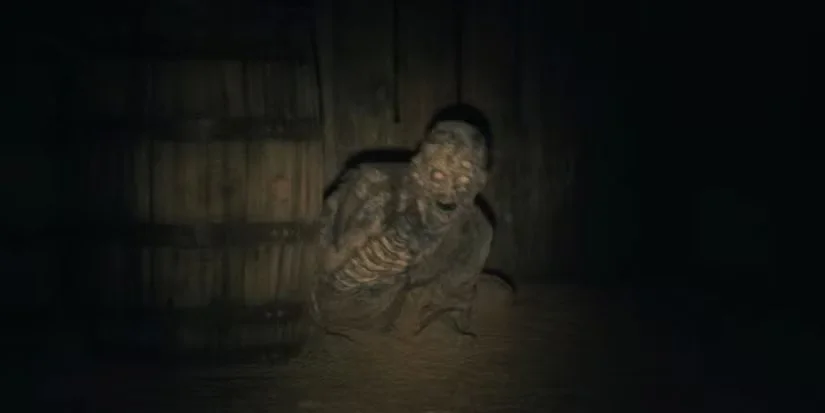
Getting deeper into “he Bent-Neck Lady”, this divide between real and unreal is complicated even further. Nell returns to Hill House, where visions of the dead push her into hanging herself. As her body falls, the noose goes taut. Her neck snaps, and she hangs there long enough for this to feel like all that is left for her. Suddenly she falls again, through the floor, into another time. She sees herself in the past. We’re seeing the other side of something. This happens again and again, going further into her own past each time. She’s been the Bent-Neck Lady all along. The Nell at the end of her life has been haunting her younger self since one of her first nights in Hill House.
While we’re watching this as though it is all really happening to her, it’s worth asking why the series continuously gave us the stories where we’re told hauntings aren’t real. If we take those examples and lean into the reading of trauma, is Nell’s story meant to be read as one of suicidal ideation? Has this image of herself after hanging been with her all this time because on some level, she was haunted by these kinds of feelings?
Nell’s story appears to bridge the side story ghosts’ explanations, with the “true” hauntings we have been seeing so far, but is it prompting us to look at the psychological explanations rather than the literal ones for everything?
If so, what do we make of the two Olivias?
Throughout the second half of the series, present-day Hugh often sees Olivia, even though she’s been dead for decades. It’s not a haunting in a typical sense; there is no tone of fear to it. He’s usually getting parenting advice from her, though he doesn’t always listen to it.
But in “Silence Lay Steadily” (S01E10), we see another ghost of Olivia in the present-day Hill House. Hugh talks of having her with him for all these years, and she responds, “Oh, love. That wasn’t me, that was just you.”
One Olivia is said to be like the ghosts from all these other stories, just a manifestation of the mind, where another Olivia is presented as though she is more real. But does that mean she is? Can we trust one potential manifestation’s word that she is real while the other isn’t?
The series gives us so many examples of hauntings not being “real” ghosts, that it clearly wants us to ask these questions, but then gives us situations like Olivia that make those lines that much harder to draw.
This blurring of lines isn’t exclusive to the hauntings of the series; it’s built into the very structure.
Past and Future
There is a blending of time built into how the entire series is presented to us. The story isn’t told chronologically; it jumps around in time. Even how the past and present play out aren’t two linear stories but shift around as we get different perspectives and context.
The audience is constantly experiencing time in this non-linear way, but there are a few examples where it goes so far as to have the characters experience it too, such as the Bent-Neck Lady’s reveal.
Another such example is in the episode “Two Storms” (S01E06). Most of the episode is built from these long tracking shots, the longest of which lasts about 17 minutes. At one point we follow present-day Hugh as he walks down a hall in Shirley’s funeral home and ends up stepping into Hill House in the past.
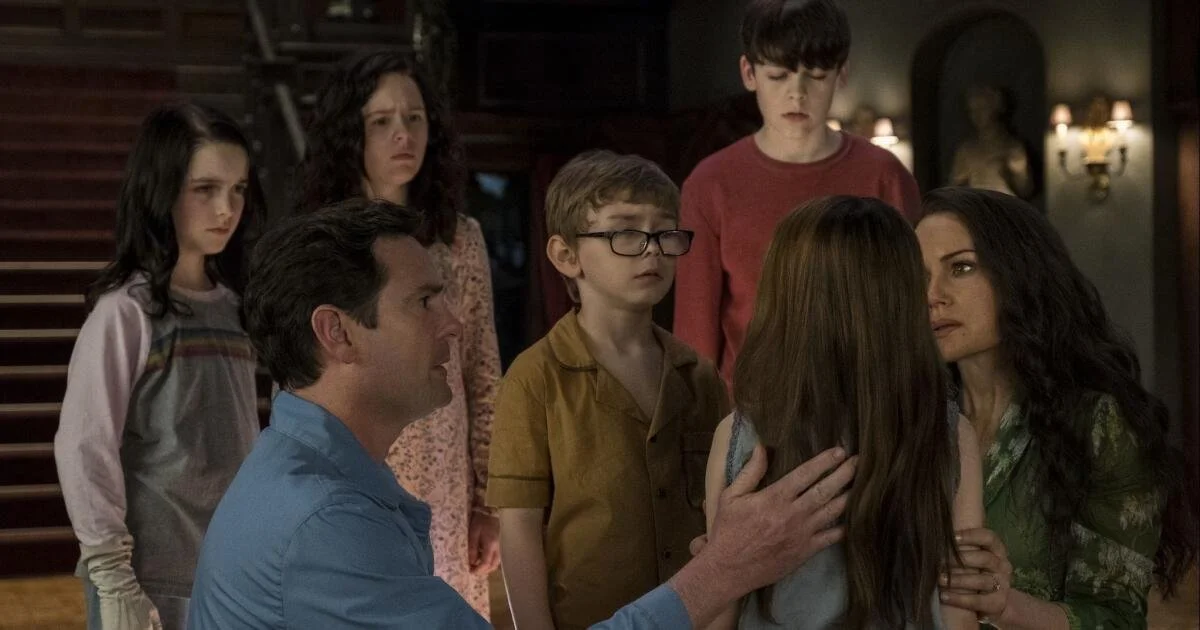
He’s not literally stepping into the past, he’s remembering it and we’re given this cool transition to show how strong this memory is. He’s connecting the loss of his daughter with another moment he feared she was lost.
Or there is “Screaming Meemies” (S01E09). This is the episode in which we finally see Olivia’s perspective on the events of Hill House that lead to her death. She spends the episode losing touch of what is real and what is a dream, with one such dream taking place in present-day Shirley’s mortuary.
She sees Nell on the table, exactly as we saw her back in episodes 2 and 3. Whether we want to see this as a real vision of the future or simply her fear, it is given extra weight to us because we have already seen this happen. But then Luke is seen on the floor. He’s dead too, seemingly from an overdose. While Luke is still alive in the present, we have reason to believe this is an incredibly likely near-future for him.
The way time is presented to us, the way we know elements of what Olivia is seeing are objectively true, creates questions of what this is. Is it just a dream that happens to be eerily accurate, or is she really seeing through time?
We come back to series’ big question: Are there real hauntings or is it something else?
If we look at the situations where characters are seeing through time, it’s all about hauntings. The fear of the future (whether it’s for themselves or their children), or a reminder of a past fear. It’s like the trauma they are haunted by breaks the flow of time.
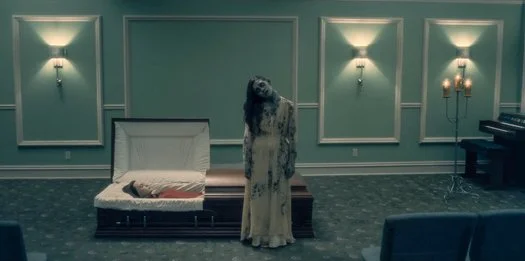
This is basically how the whole flashback structure functions. While the Crain siblings are trying to live their lives, their constantly pulled back to their Summer at Hill House, this place where they were witness to their mother’s declining state and eventually lost her. And, depending on where things land on if ghosts are real, experienced a fuck-ton of haunting.
Our view of time across this series, becomes intrinsically linked with the question of if the hauntings are real. Our understanding of how time functions can change based off what answers we land on.
The ghost of Nell explains time in the final episode:
“I feel a bit clearer now. Everything’s been out of order. Time, I mean. I thought for so long that time was like a line, that… our moments were laid out like dominoes and that they… fell, one into another, and on it went, just days tipping, one into the next, into the next, in a long line between the beginning… and the end. But I was wrong. It’s not like that at all. Our moments fall around us like rain. Or the snow… Or confetti.”
Her metaphor of rain is an accurate representation of how the audience is experiencing time in the story. We are seeing random moments falling all around us, rather than one tipping into the next. But this also feels accurate to how any of the trauma being represented across the series can feel. Being in one time but then suddenly sent back to a horrible event(s) from your past, or imagining the potential futures.
You might say that the relationships between hauntings and trauma, or the past and the future, are like twins.
The Twin Thing
Nell and Luke. A girl and a boy. A pair of twins. Different sides linked together.
The twins are the ones who struggle most as adults. They are also the ones who were most directly targeted by their mother’s declining state as she sought ways to protect them from the outside world.
Nell’s reaction was to find outside forces that could help her give purpose or explanation to her feelings. As Steven says in “The Bent-Neck Lady”:
“I’ve seen all the phases with you. The Christian phase, the New Age phase, the crystal phase, the antidepressant phase. You don’t get to just start smashing up our lives because you’re transitioning into a new treatment, Nell.”
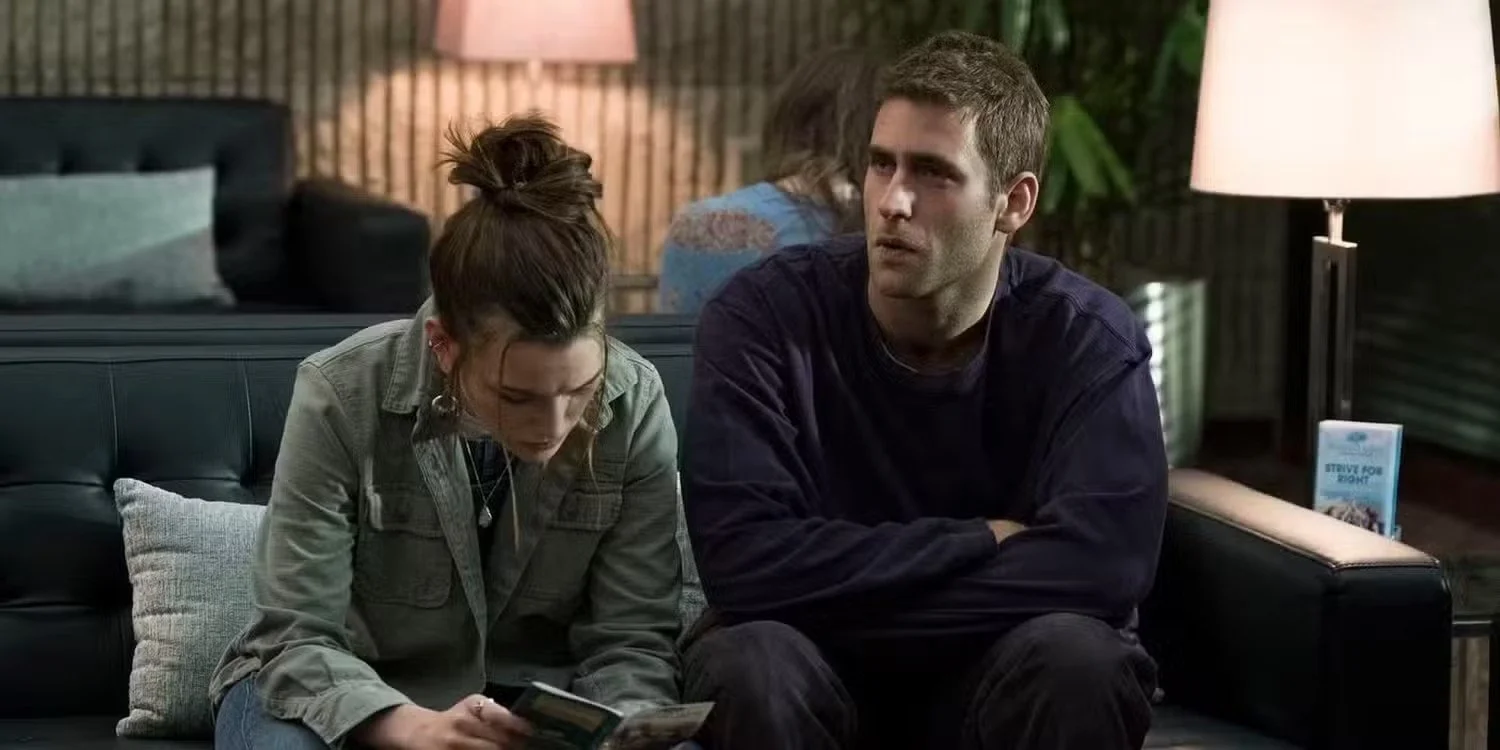
Luke, on the other hand, seeks escape. He’s an addict. He turned to drugs to deal with everything he’s gone through.
But then there is how those struggles present themselves through how they are haunted.
We learn that the ghost haunting Nell is her own dead self from the future, whereas the ghost haunting Luke was a man who sealed himself in a wall in Hill House’s past.
When we look at the question of trauma or haunting with these two in mind, we’re not only seeing opposite survival mechanisms to deal with the trauma, we’re seeing how they are connected to opposite states of time. And by the end, we’re seeing two opposite results of it all, as one twin is living and the other is dead.
In “The Twin Thing”, Luke talks about how the two feel what happens to one another. He tells the story of the time he broke his foot and Nell called, saying her “ankle just went nuts” while she was watching tv. Throughout this episode, Luke’s body grows cold and stiff after Nell’s death, symptoms that lead people to believe he is back on drugs and experiencing withdrawals.
Just like the other dichotomies we have been looking at, the lines between the characters have blurred.
So, we return once again to the question of whether the hauntings meant to be taken as real or a metaphor. Giving everything the show is telling us, it feels worth adding: Does it have to be one or the other?
Hamlet
Toward the end of the “Steven Sees a Ghost” (S01E01), we see the young version of Steven talking Mrs. Duddley, one of the caretakers of Hill House. Steven waves off things like tarot cards and Ouija boards as nothing but parlour games, prompting Mrs. Dudley to show her disdain for what she calls “the secular world” for how they “smother you in science”.
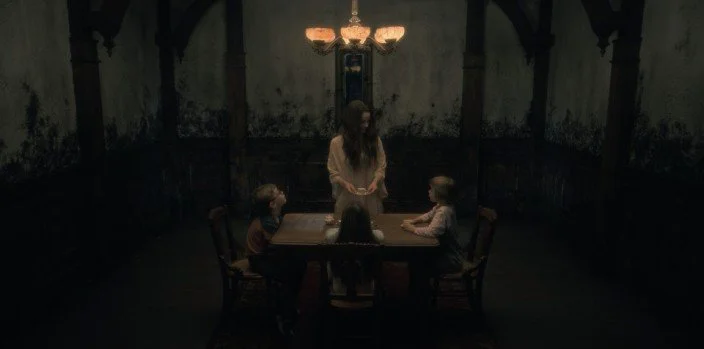
Olivia walks in just as Mrs. Dudley is asking if Steven knows of the Gospels. Olivia explains that not only have she and Hugh had Steven read the Gospels, but also the Talmud, the Tao Te Ching, the Torah, the Quran, Greek mythology, and throwing in some Carl Sagan and Shakespeare. Their intent was that they never want anyone to convince their son that there is one singular place to find the answers to all of life’s questions.
The point is punctuated by Steven and Olivia each reciting half of the Hamlet quote, “there are more things in heaven and Earth, Horatio, than are dreamt of in your philosophy.”
The quote comes back in episode nine, “Screaming Meemies”. When Olivia tells Mrs. Dudley about a seemingly paranormal event she experienced when her father died, and gives the rational explanation, Mrs. Dudley reminds her of the quote.
There are more things in heaven and Earth…
When presented with two opposing options, to lean entirely on one doesn’t suffice. Don’t look to one place for all the answers.
For the sake of brevity (relative brevity? Maybe? I tried…), I focused on the major dichotomies of the series here, hauntings and time. But these twinned ideas are a constant through the series. We can look at Olivia’s struggles with dreams vs reality. We can look at Hugh and Olivia’s eventual different views between letting the kids live their own lives vs protecting them at any cost. Or similarly the Crains vs the Dudleys on how much to expose your kids to other ideas. Or the Dudleys seeing Hill House as a terrifying curse vs, by the end, a gift. Or there are the many answers to the question of what’s behind the red door.
I think the ultimate result of linking these ideas, is having us ask these questions isn’t about coming to any one answer, it’s just about the question itself. It’s about getting us to a point where we look at the idea of someone being haunted, even if there is a connection to trauma, and whether there is a difference at all.
If the trauma feels like being haunted, does it matter what the answer is?